|
From Spanish olive groves to Californian plantations, modern olive growing is transforming the way extra virgin olive oil is produced. With TERZELI, this production model has now found a home in North Macedonia.  Biobotanica - Terzeli EVOO | North Macedonia 2026 Macedonia is a country of wine, but its southernmost region may soon become known for another Mediterranean product: olive oil. Not through centuries-old groves or an inherited olive-growing tradition, but through a modern approach that has transformed olive oil production in Spain's Catalonia and Andalusia, Portugal's Alentejo, and California's Central Valley over recent decades. The occasion for exploring this emerging story was Oleada 2026, an event celebrating the new harvest and the presentation of TERZELI extra virgin olive oil. Behind the project is Biobotanica, a Macedonian company pioneering super-high-density olive cultivation in the south of the country. A first glance at the groves reveals a landscape quite different from traditional Mediterranean olive growing. Instead of widely spaced individual trees, the olives are planted in continuous, carefully managed hedgerows. Across six hectares, 14,286 trees have been planted, representing almost 2,400 trees per hectare and allowing for a fundamentally different approach to cultivation and harvesting. This system is known as Super High Density (SHD). Its value extends beyond greater production efficiency. It also offers precise control over one of the most important factors in olive oil quality: the time between harvesting and extraction. After all, freshness lies at the heart of quality olive oil — from the condition of the fruit and the speed of processing to the preservation of its aromatic potential. This is precisely where SHD, supported by a well-organized production process, offers a significant advantage. Technology in the Service of Quality The concept of super-high-density olive growing emerged in Spain during the 1990s and has since spread to numerous production regions. Its development has been particularly significant in Portugal's Alentejo, where it has become an important part of modern olive cultivation, and in California's Central Valley, where advanced agricultural technology has been combined with the ambition to produce high-quality extra virgin olive oils. At the heart of this approach lies a straightforward principle: healthy olives should be harvested at the optimal stage of ripeness and processed as quickly as possible, with minimal fruit damage and careful control throughout production. Unlike production systems in which harvesting may extend over several weeks and processing depends on the availability of external mills, an integrated operation allows harvesting and extraction to be closely coordinated. This reduces the risk of fruit deterioration and helps preserve its aromatic potential. TERZELI follows precisely this philosophy. Mechanized harvesting and carefully coordinated processing ensure a swift transition from grove to mill, where extraction takes place using advanced technology from Pieralisi, the renowned Italian manufacturer of olive oil extraction systems.  Modern harvesting in action at Oleada 2026: New Holland and Lamborghini machinery at the TERZELI olive estate in North Macedonia. Yet the project's value lies not in the names of its equipment suppliers, but in how the entire process is organized. From tree to extraction, time becomes a production variable that can be actively controlled. This does not mean that technology alone guarantees exceptional olive oil. It does, however, create conditions in which high quality can be achieved and preserved more consistently. The Mediterranean Character of Southern Macedonia TERZELI's geography is just as interesting as its technology. Situated in the western extension of the Belasica mountain landscape, the area opens southward along the Vardar Valley towards the Thessaloniki Plain and the Aegean Sea. This geographical connection allows Mediterranean climatic influences to reach deep into Macedonia's interior. Recognizing this potential, Biobotanika established its groves in 2022, planting three olive varieties: Arbequina, Oliana and Lecciana. These varieties and selections are well suited to modern cultivation systems and are already used in olive-growing projects internationally.
Oleada 2026 therefore offered more than an opportunity to present a new harvest. It brought attention to an agricultural potential that has long remained in the shadow of Macedonia's better-known products.  Freshly extracted TERZELI extra virgin olive oil — the final result of a carefully controlled journey from grove to mill. Whether Macedonia will one day gain recognition for high-quality olive oil will depend on time and the results of future harvests.
Yet TERZELI has already shown that the future of Macedonian olive growing need not be built on a tradition the country does not possess, but on knowledge, technology, the potential of its own land and, certainly, Macedonian perseverance.
0 Comments
Your comment will be posted after it is approved.
Leave a Reply. |
AuthorTerroir.mk 


GRAND VIN
SPRING WINE SALON 28 March 2026 
WINE COURSES
click on image 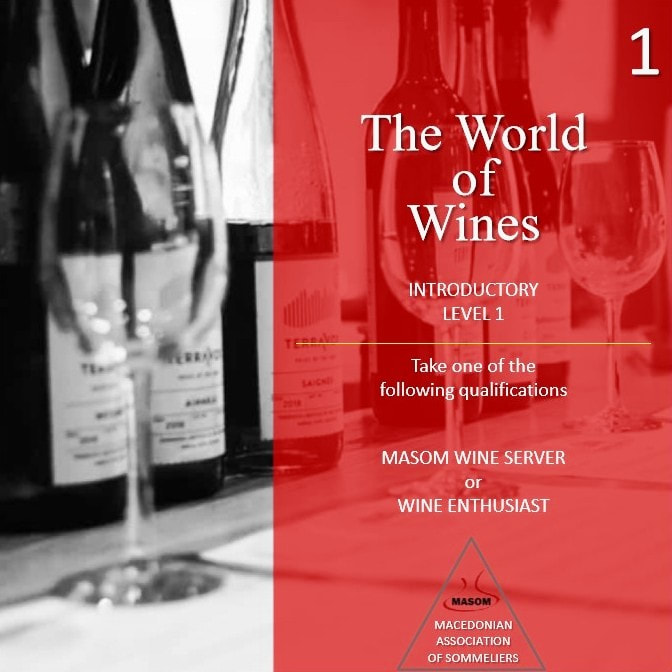
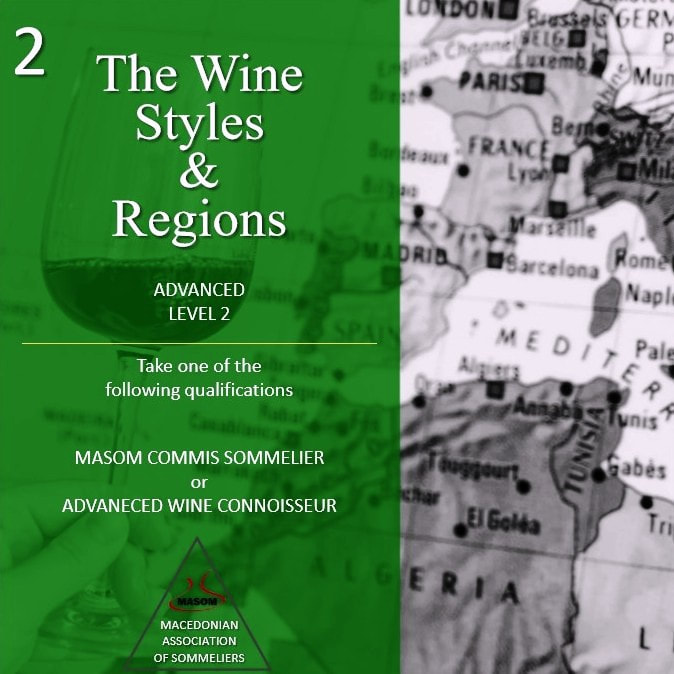


TASTE of AWARDS
03 October 2025 Hotel Marriott 18:30 - 23:00 
VRANEC WINE SALON
04 October 2025 Museum of Contemporary Art 20:00 
|

 RSS Feed